How Does No-Contact Roof Cleaning Work?
Picture the usual image of roof cleaning: someone crouched on the slope, scrubbing away at the tiles with the ground a long way below. Now picture the roof being cleaned just as thoroughly with nobody on it at all. That second picture is what no-contact roof cleaning delivers, and once you understand how it works, the reasons it has become the preferred method are obvious.
No-contact cleaning is built around a simple principle: the tiles get cleaned, but they do not get walked on, blasted, or scraped. This guide explains how the method works step by step, what equipment makes it possible, and why keeping people and pressure off the tiles is better for the roof.
The Core Idea: Clean the Roof Without Touching It
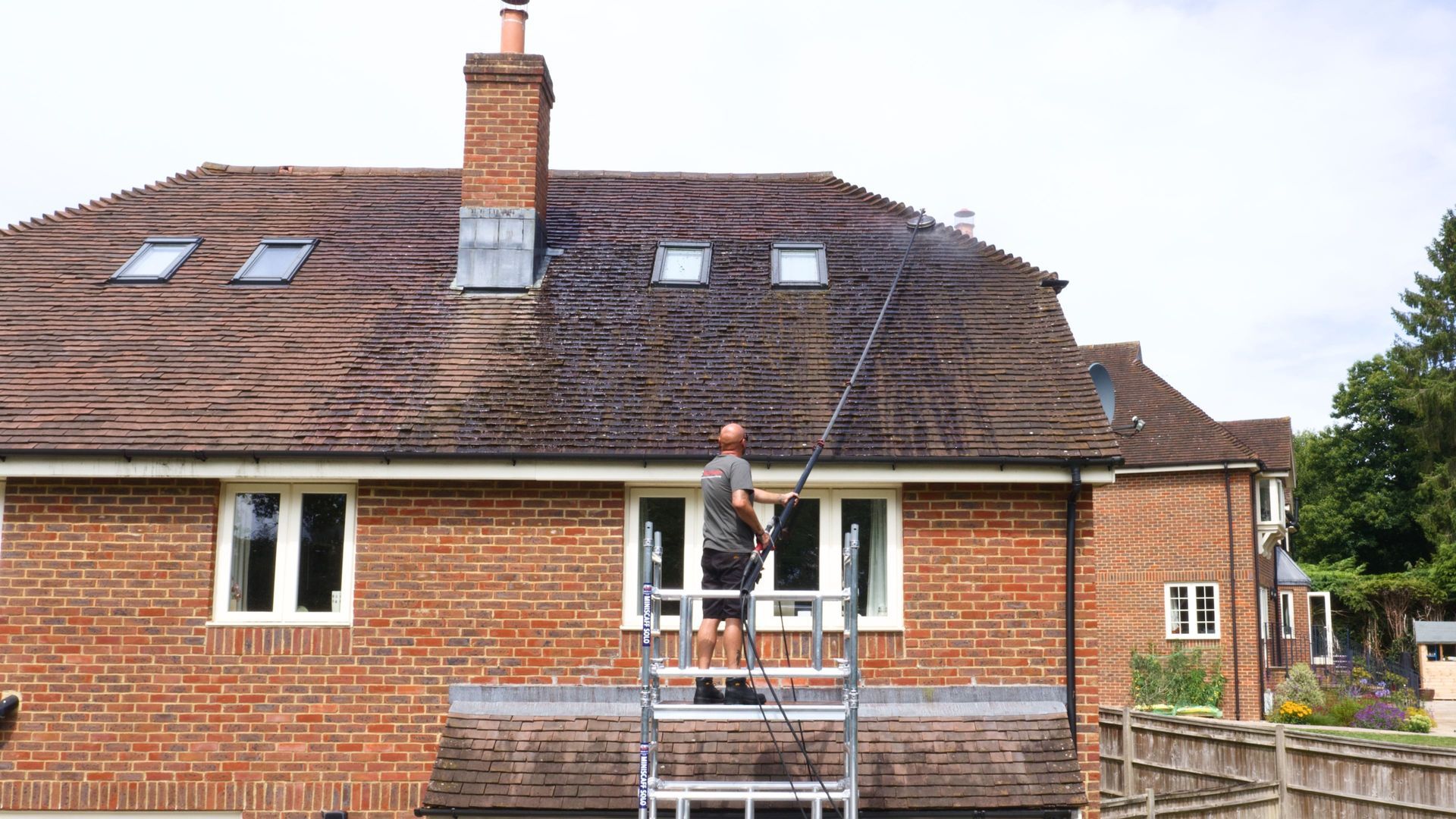
The defining feature of no-contact cleaning is right there in the name. Rather than reaching the moss by climbing onto the roof, the operator works from a position beside or below it and uses equipment that extends the reach to the tiles. The growth is lifted and cleared using controlled, water-based cleaning rather than force applied by hand or by a high-pressure jet.
This matters because most of the damage done during roof cleaning comes from contact: feet cracking weakened tiles, wire brushes scratching the surface, pressure washers stripping coatings and forcing water inside. Remove the contact and you remove the damage. The roof is cleaned by lifting the growth gently from a distance, leaving the tile surface as it was found.
How the Process Works, Step by Step
Inspection and patch test first. Before any cleaning, the roof is assessed and a small patch test carried out. This confirms the tile type and condition and checks how the surface responds, so the method is matched to the roof.
Safe access is set up. Mobile scaffold towers are positioned beside the roof, or the team works from ground level, giving safe, stable reach to the tiles without anyone standing on the slope. Surrounding areas are protected before work begins.
Growth is lifted, not blasted. Using specialist water-based equipment, moss, algae, and lichen are gently cleared from the tiles. The aim throughout is to remove the growth while leaving the protective tile surface untouched, which rules out high-pressure jetting and abrasive scraping.
Debris is cleared. Loosened moss and debris are collected and the surrounding area, including gutters, is cleaned down so nothing is left to wash back onto the roof or block drainage.
Biocide is applied.
To slow regrowth, a non-toxic biocide can be applied that continues working on the surface for months, making the tiles less hospitable to new moss and algae.
Tip: When comparing roof cleaning quotes, ask directly how the company reaches and cleans the tiles. A clear answer describing towers or ground-level access and water-based, no-pressure cleaning is a good sign. Vagueness, or a plan that involves walking the roof with a pressure washer, is worth questioning.
Why Keeping Off the Tiles Protects the Roof
Tiles are not designed to be walked on repeatedly, and moss makes them slippery and can weaken them. Standing on the slope risks cracking tiles underfoot and disturbing their alignment, both of which can lead to leaks. By keeping people off the tiles, no-contact cleaning removes that risk entirely.
The method also avoids the surface damage caused by aggressive tools. High-pressure washing strips the coating that helps tiles shed water, and wire brushing scratches and roughens the surface, both of which make moss return faster. A gentle, no-contact clean leaves the coating intact, so the roof not only avoids damage but resists regrowth better afterwards. A
Roof Cleaning carried out this way is designed to add life to the roof, not take it away.
Why It Is Safer for People Too
Roof cleaning has always carried a real risk to whoever does it, because it means working at height on slippery, sometimes fragile tiles. Falls from roofs and ladders are a serious hazard. No-contact cleaning addresses this directly by keeping the operator on stable towers or on the ground rather than on the slope.
This is not a minor detail. A method that removes the need to stand on a wet, mossy roof protects the people doing the work, and it means a homeowner is not tempted to attempt something dangerous themselves. The safety benefit and the tile-protection benefit come from the same choice: do not get on the roof. Clearing the roofline with Gutter Cleaning is handled with the same safe-access equipment, avoiding ladders where possible.
In our 15 years on Sussex roofs, the no-contact approach has proven itself on exactly the roofs where walking the slope would be riskiest: steep pitches, older tiles, and heavily mossed surfaces.
No-contact roof cleaning removes moss, algae, and lichen without anyone standing on the tiles. The work is done from mobile scaffold towers positioned beside the roof or from ground level, using specialist water-based equipment that lifts growth from a safe distance. Because no one walks the slope and no high-pressure jet or abrasive tool touches the tiles, the surface stays intact and the risk to both the roof and the operator is greatly reduced.
Frequently Asked Questions
Does no-contact cleaning get the roof as clean as walking on it?
Yes. The method reaches and clears the tiles thoroughly from towers or the ground, so the roof is cleaned just as effectively as it would be by someone on the slope, without the risk of cracked tiles or a stripped surface. When a biocide is applied afterwards, the tiles continue to clear and stay cleaner over the following months.
Can every roof be cleaned without contact?
The great majority of tiled roofs can be cleaned this way, using a combination of scaffold towers and ground-level equipment suited to the property. Access varies from house to house, which is one of the things assessed during the initial inspection. Steep and hard-to-reach roofs are in fact where the no-contact approach is most valuable, because walking them would be the most dangerous.
Is water-only cleaning strong enough to remove heavy moss?
Water-based, no-contact cleaning lifts even established moss effectively, because it works by clearing the growth rather than relying on the force of a pressure jet. For stubborn growth like lichen, the follow-up biocide is especially important, as it keeps breaking down residual growth over the following months. Heavy moss is cleared without needing the high pressure that damages tiles.
Why not just use a pressure washer from the ground?
Even used from a distance, high-pressure water can strip the tile coating, force water under the laps, and dislodge mortar, so the pressure itself is the problem, not just the position. No-contact cleaning uses controlled water-based methods that avoid that damaging force. The goal is to remove growth with as little pressure on the tiles as possible, not to blast it from a safer angle.
Does the biocide form part of the no-contact method?
The biocide is an optional but valuable final step. After the growth is cleared, applying a non-toxic biocide slows the return of moss, algae, and lichen by keeping the surface less hospitable for months. It complements the gentle cleaning by extending how long the roof stays clear, which is why the two are usually offered together.
See no-contact cleaning on your roof — Book a free inspection and a clean done from towers or the ground, never by walking your tiles. Ben's Roof Cleaning protects the surface and includes a patch test. Call 0158 232 9760.
Cleaning That Respects the Roof
No-contact roof cleaning works by turning the usual approach on its head: instead of reaching the moss by climbing onto the tiles, it reaches them from towers or the ground and lifts the growth gently with water-based equipment. That single choice, to clean the roof without touching it, is what protects both the tiles and the person doing the work. The surface coating stays intact, no one risks a fall from a slippery slope, and with a biocide to slow regrowth the roof stays clear for longer. It is a method built around doing the job thoroughly while leaving the roof exactly as sound as it was found.